
The Prizewinner 2026
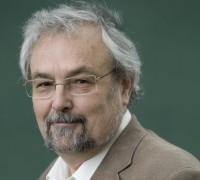
| Name | Dr. Robin Ian MacDonald Dunbar |
|---|---|
| Born on | 28 June 1947 |
| Nationality | U.K. |
| Title | Emeritus Professor, Department of Psychology, University of Oxford |
Reasons for the Award
Dr. Robin Ian MacDonald Dunbar has examined human society and sociality through his interdisciplinary research spanning anthropology, evolutionary psychology, primatology, and cognitive science. On the path that humanity should take, he has provided a scientific approach to the fundamental question of who we are. The foundational milestone of his work is the establishment of the Social Brain Hypothesis. The large neocortex of primates, especially humans, is thought to have evolved to maintain complex social relationships. Dr. Dunbar compared the ratio of the neocortex to the rest of the brain across various primate species with different group sizes, demonstrating that the larger the group size, the higher the ratio of the neocortex. This research led him to propose “Dunbar’s number,” an upper limit to the number of people with whom a human being can maintain comfortable social relationships, including family members and friends, determined by the size of the modern human brain. This theory has spread far beyond academia and been widely accepted by the general public, providing a new perspective on the social structure and social behavior of humanity.
Dr. Dunbar explored the Social Brain Hypothesis by examining how time is allocated to various daily activities, thereby elucidating the evolutionary factors behind the psychological and social traits of the human species. Specifically, he focused on how a species allocates its day to three survival-essential activities: resting including sleeping, foraging for nutrition, and interacting to maintain social relationships. Based on this, he inferred the relationships between these time allocations and the species’ lifestyle, physiological traits, and social structure in order to construct a model. By applying this model to early humankind, he scientifically inferred and reconstructed the process through which humanity expanded into new niches. This analysis quantitatively showed that increased efficiency in traveling for feeding due to reduced body hair, maintaining social cohesion due to the development of laughter, and feeding due to the use of fire for cooking is among critical factors behind the process of human evolution.
Changes in the traits of early humankind, such as changes in the mode of feeding and the loss of body hair, have complex relationships with various ecological factors, including the temperature, precipitation, and vegetation of their habitats, as well as the distribution of food. Dr. Dunbar and other members of his research group developed a mathematical model that enables quantitative analysis of the relationship between changes in these ecological factors and changes in the characteristics of human society, and with this model, they succeeded in scientifically interpreting the process of human evolution in the context of the dynamism of the global ecosystem.
Moreover, Dr. Dunbar argued that the expansion of the human brain served as a significant driver for the evolution of language, asserting that human language evolved to maintain social cohesion in large societies. He also revealed through detailed analysis that laughter, feasting and drinking, religion, and festivals also contributed to and are important to this process.
The impact that humanity has had on the environment and ecosystems has now reached such a serious and irreversible stage that the concept of the "Anthropocene" has been proposed. In this context, when considering a desirable relationship between nature and humanity in the future, it is necessary not only to comprehend the impact that humanity today has on the environment and ecosystems, but also to re-examine the fundamental question of how humanity originated, evolved, and formed its culture and civilization in the first place. Without this ontological perspective, the foundation for envisioning the relationship between humans and nature in the future will be fragile, preventing a proper formulation of the overall vision.
Humans constitute a part of nature, yet they are also beings that alter the natural environment through science, technology, and economic activities. Therefore, Dr. Dunbar’s research on human evolutionary history, which seeks to understand the essence of human behavior and values and to re-examine the nature of society, will provide a solid academic foundation in relation to the Anthropocene concept in the future. In recognition that his research reveals, from an integrated perspective, the essence of change and diversity in the interactions between living organisms and the Earth, we have determined that Dr. Robin Dunbar deserves the International Cosmos Prize.
Professional Preparation
| 1969 | B.A. (Oxford University): Psychology & Philosophy |
| 1973 | Ph.D. (Bristol University): Psychology |
| 2007 | M.A. (Oxford University) |
Appointments
| 1974‐1977 | Postdoctoral Research Associate: Psychology Dept, Bristol University |
| 1977‐1982 | SERC Advanced Research Fellow |
| 1979 | Visiting Research Fellow [Kyoto University's Primate Research Centre], Japan Society for Promotion of Science |
| 1983 | Asst. Professor (`docent’): Zoological Institute, Stockholm University, Sweden |
| 1983‐1985 | Research Associate, S/Dept of Animal Behaviour, Cambridge University |
| 1985‐1987 | University Research Fellow: Zoology Dept, Liverpool University |
| 1987‐1992 | Lecturer and Reader: Anthropology Dept, University College London |
| 1992‐1994 | Professor of Anthropology: University College London |
| 1994‐1997 | Professor of Psychology: Psychology Department, University of Liverpool |
| 1997‐2003 | Professor of Evolutionary Biology: School of Biological Sciences, Liverpool University |
| 2003‐2007 | Professor of Evolutionary Biology: School of Biological Sciences, Liverpool University |
| 2007‐2012 | Professor of Evolutionary Anthropology, University of Oxford |
| 2012‐2017 | Professor of Evolutionary Psychology, University of Oxford |
| 2014‐2017 | Visiting Professor, Department of Computer Science, Aalto University, Finland |
| 2017-Present | Emeritus Professor, Department of Psychology, University of Oxford |
International awards and honours
| 1988 | Elected Fellow, Royal Anthropological Institute |
| 1994 | Osman Hill Medal, Primate Society of Great Britain |
| 1994 | Monro Lecture, Edinburgh University |
| 1998 | Dr van Hofsten Memorial Lecture, Uppsala University (Sweden) |
| 1998 | Elected Fellow of the British Academy |
| 2000 | Millenium Lecture, University of Bath |
| 2005 | Galton Lecture, Galton Society |
| 2007 | British Academy/British Psychological Society Annual Psychology Lecture |
| 2009 | Stirling Lecture, University of Kent |
| 2009 | Monro Lecture, Edinburgh University |
| 2012 | DSc (Hon), Aalto University, Finland |
| 2015 | Huxley Medal, Royal Anthropological Institute |
| 2019 | Human Roots Award, Mainz Museum |
| 2021 | Elected Foreign Fellow, Finnish Academy of Science and Letters |
| 2021 | Kavli Lecture, Association for Psychological Science (USA) |
| 2022 | Elected Honorary Fellow, Hungarian Academy of Sciences |
Books etc.
- The Trouble With Science. Faber & Faber and Harvard University Press, 1995
- Grooming, Gossip and the Evolution of Language. Faber & Faber, 1996
- How Many Friends Does One Person Need?: Dunbar's Number and Other Evolutionary Quirks. Faber & Faber, 2010
- The Science of Love and Betrayal. Faber & Faber and Harvard University Press, 2012
- Human Evolution. Pelican Press and Oxford University Press, 2014
- Friends: Understanding the Power of our Most Important Relationships. Little Brown, 2021
- How Religion Evolved and Why It Endures. Pelican Press and Oxford University Press, 2022